As I reach the end of the project this final blog is a reflection on the finished pictures and how they evolved from the initial concept to a carefully curated narrative. In this post I discuss the outcome – the narrative behind my photographs, the choices I made in structuring the series, and my overall reflection on the process and end results.
The final series of photographs is built around the narrative of human connection and things being overlooked. It is centred on the volunteers who provide the food and support the homeless, and the connection through this community built on a foundation of mutual care. I aimed to highlight small but powerful moments – the hand reaching out with a meal, the composed queue of joyful people, the shared smiles between volunteers and the silent exchanges of gratitude. These moments form an invisible thread, built on emotion, that ties my series together.
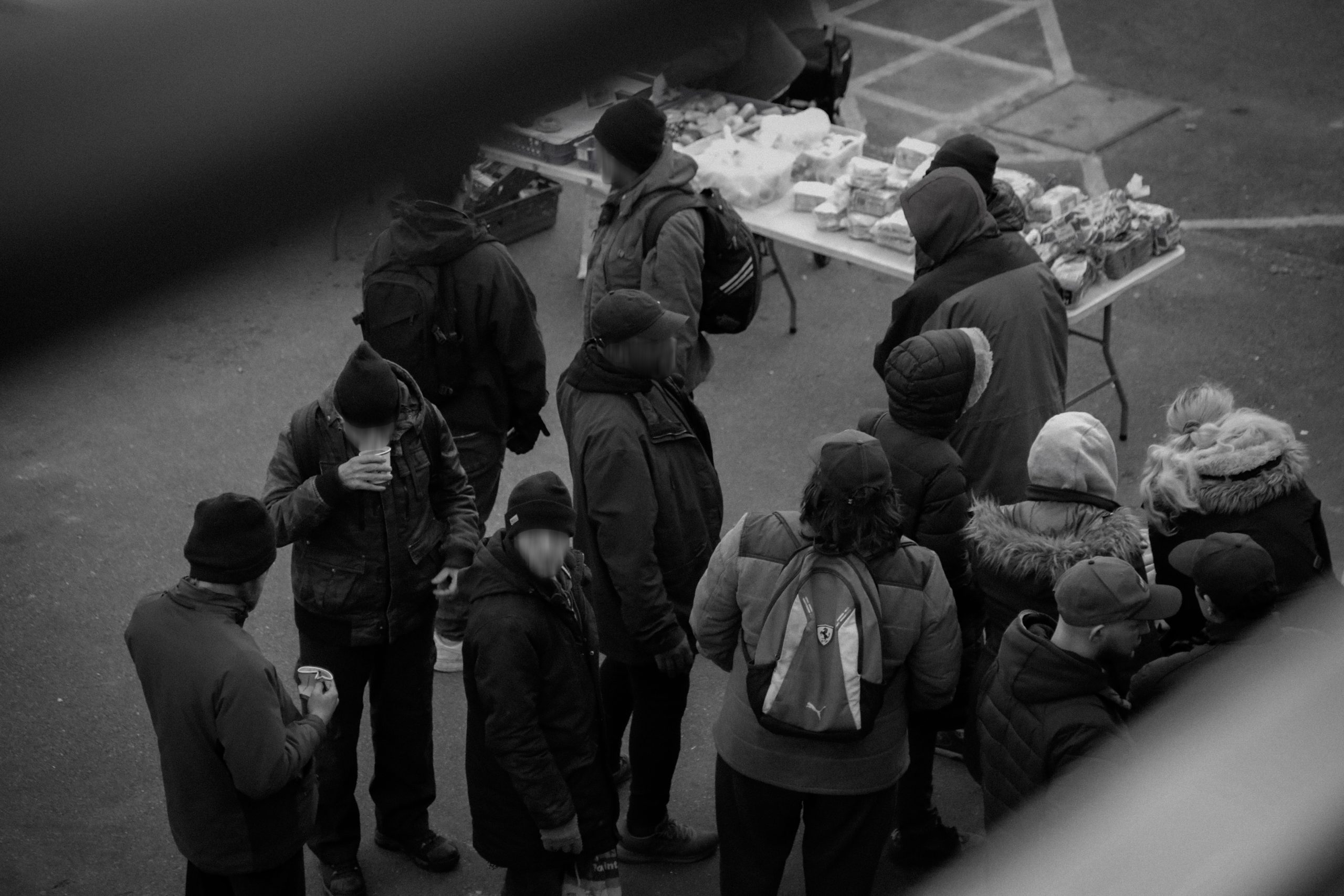
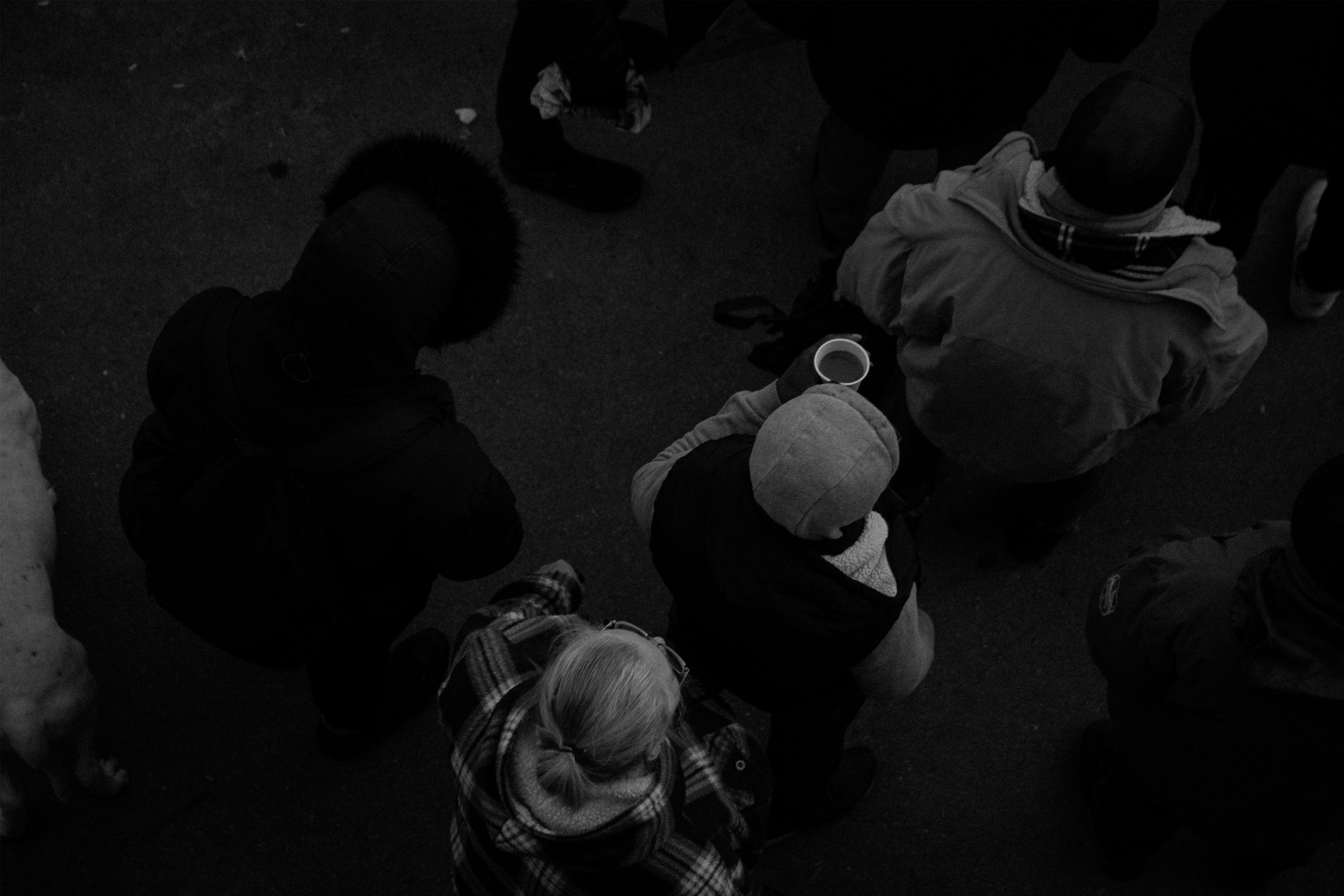
When selecting the final ten images, I intentionally chose photographs that carried the emotion and story without exploiting vulnerability. As the subject matter is sensitive and carries privacy concerns, I leaned into more symbolic, detail-oriented shots – close-ups of hands, blurred silhouettes, and images that captured body language instead of the faces of the homeless. This allowed me to maintain a meaningful story throughout the series.
Even the order of my images crafts the story. It unfolds with a gentle build-up, setting the scene with quieter observational images in a fly-on-the-wall style, using elevated roofs and bridges to gain perspective and establish the environment. It then moves to the heart of the story, capturing the interactions, the flow of the food and the emotion in the atmosphere. Toward the end the pace slows again, closing with moments of stillness and reflection – a volunteer packing up the remaining food, calm still moments, and volunteers talking about the day. A collection of honest, human gestures, authentically caught in the moment: the unspoken strength of a community that is invisible in plain sight.
For structure and layout, I mirrored the flow of a natural day at the street kitchen, following a narrative arc with a beginning, middle and end – setting the environment, moving into the active period of serving and engagement, then ending with quieter, more reflective scenes. I grouped the images thematically rather than chronologically so I could place shots together to strengthen the impact, and paired certain images side by side to create a subtle visual dialogue.
My visual decisions were influenced by the work of Alex Majoli, particularly his use of contrast and light to heighten emotion. I used shadow, contrast and natural light to add drama and intimacy. The structure was designed to slow the viewer down and let them take in the quiet strength of the people captured.
Looking back, this project has been both creatively challenging and deeply rewarding. Each phase pushed me to grow – not just technically, but in how I engage with people. I refined my use of composition, natural light and sequencing to build a strong visual language. The ethical challenges of photographing vulnerable individuals became a turning point, forcing me to develop a more sensitive, human-centred style.
There were compromises – some images didn't fit the flow of the final series, and some moments were missed because I prioritised consent. Overall, I'm proud of how the project evolved. It reflects not just the people I documented but my growth in photography, and it helped the street kitchen receive professional images they can use however they please.